Taste Archive
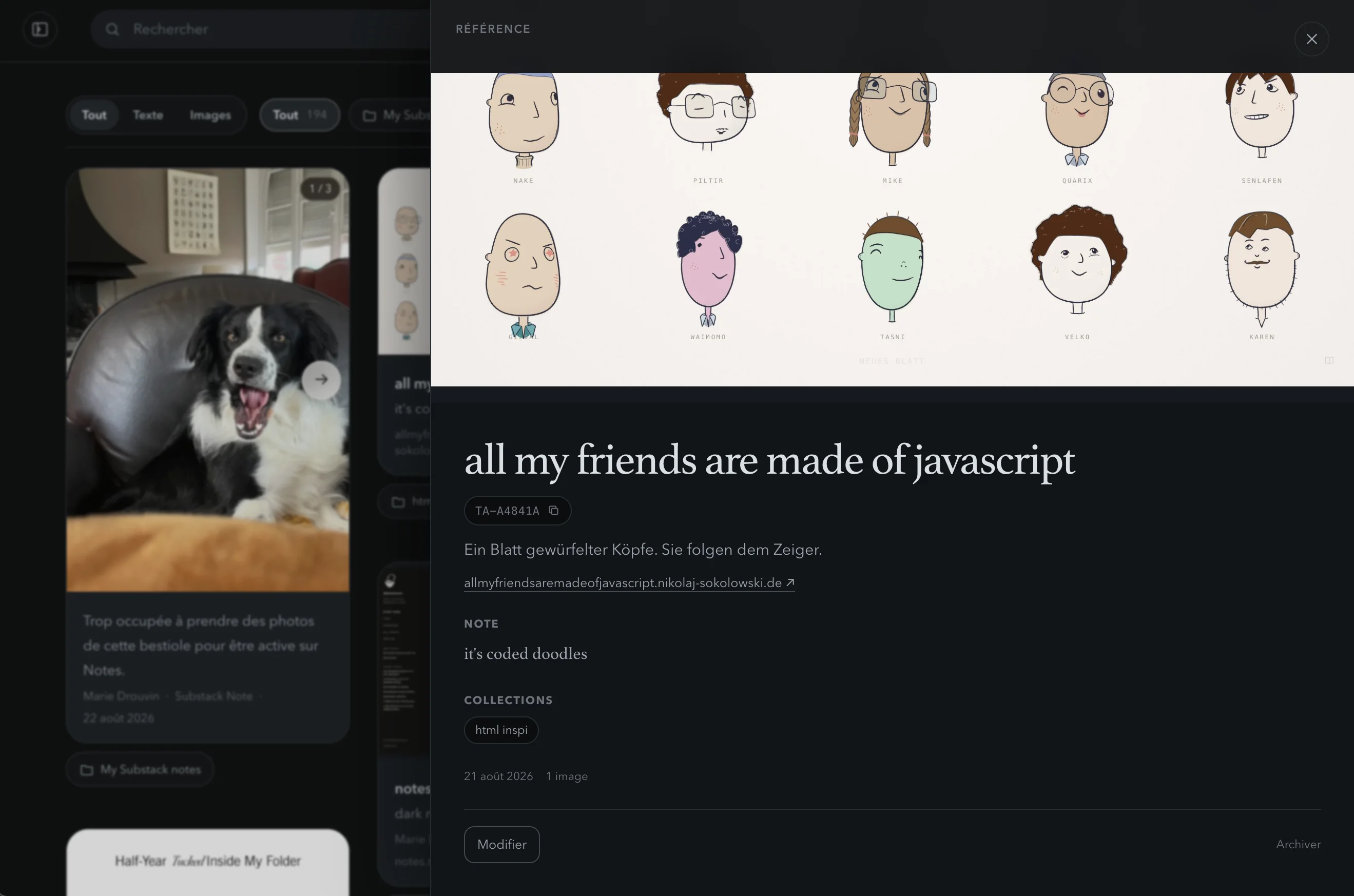
A private visual archive I built to collect references, think with them on a canvas and call them into my AI work by code or collection.
Why I made this project
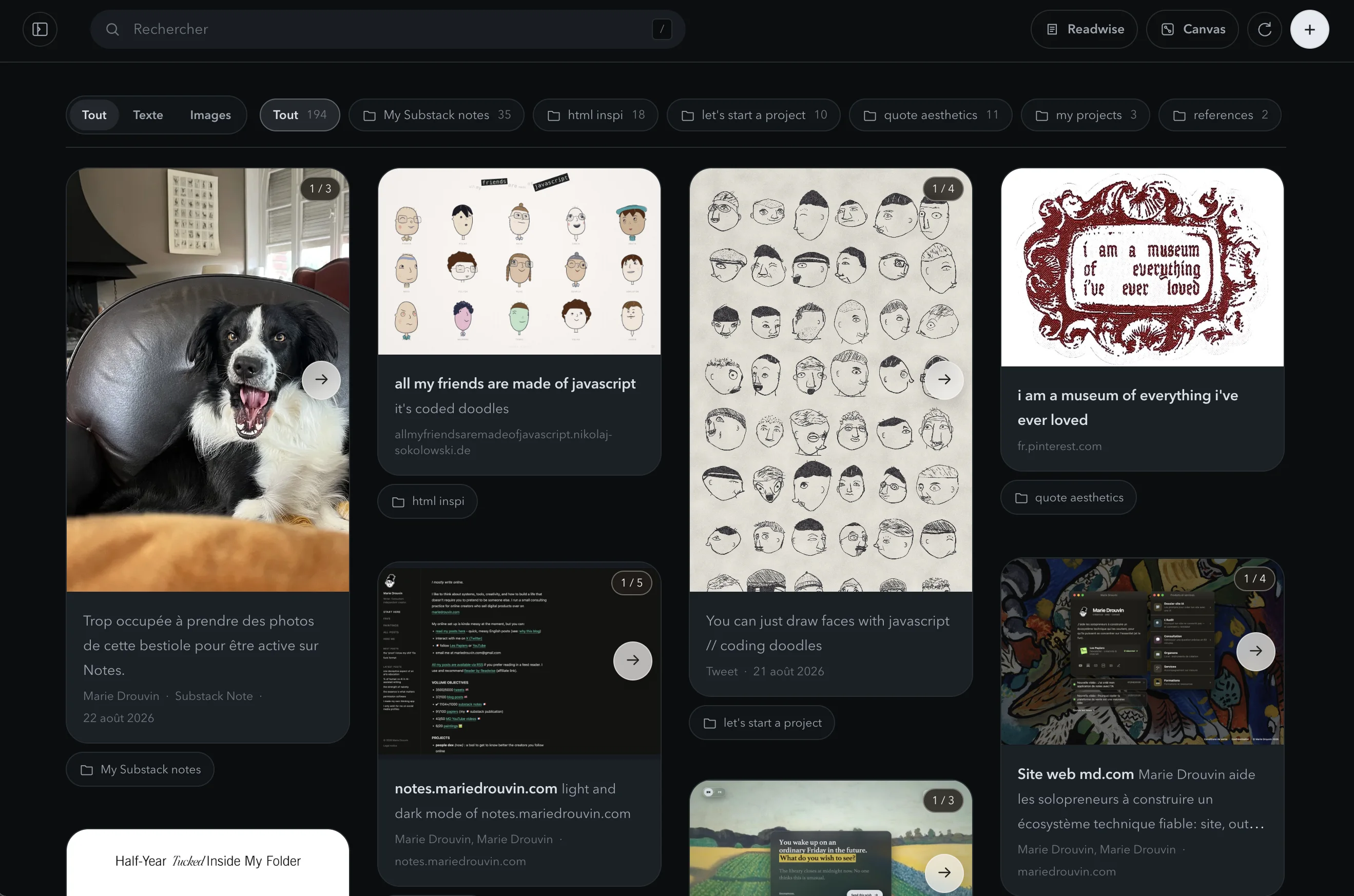
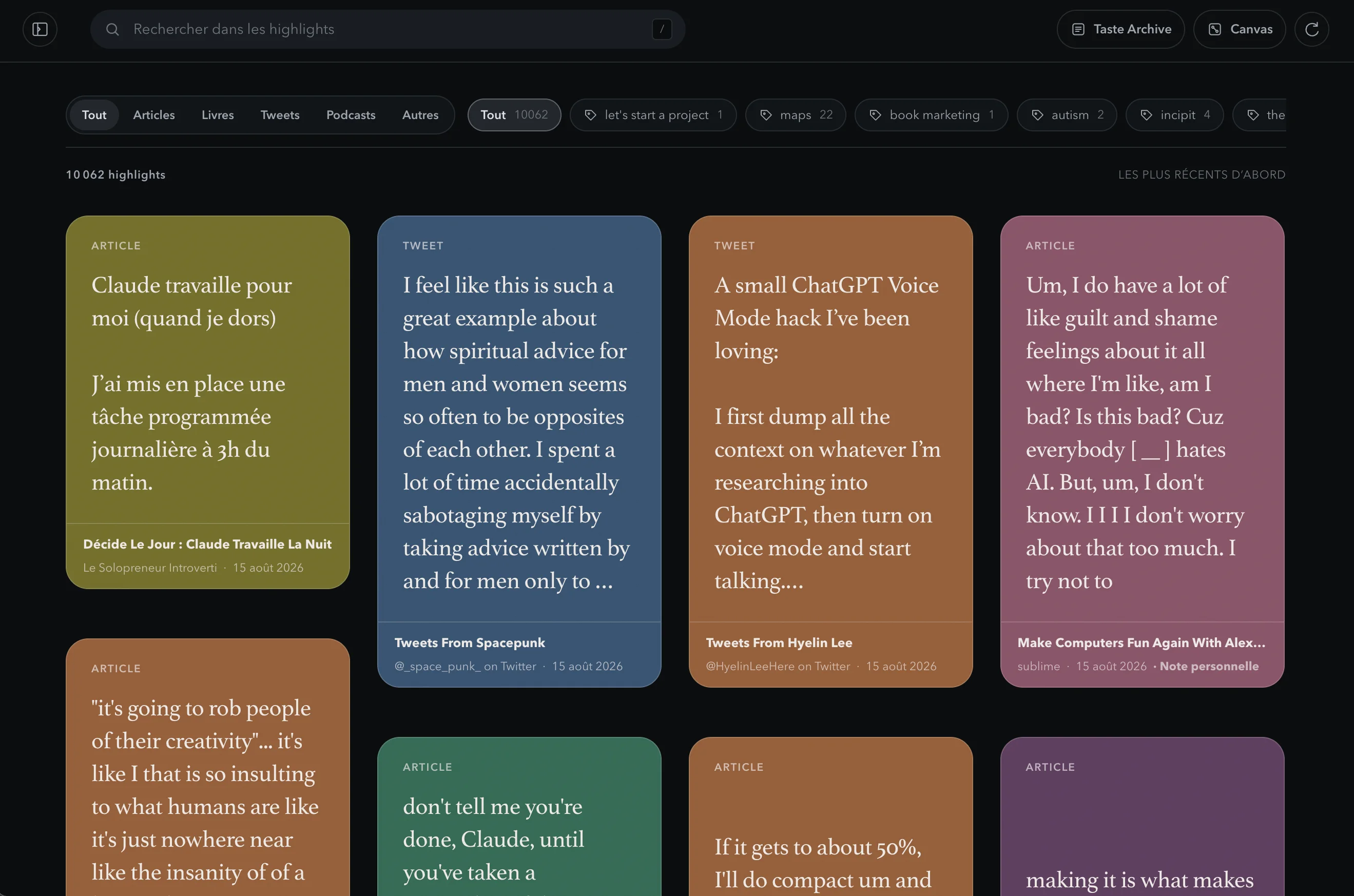
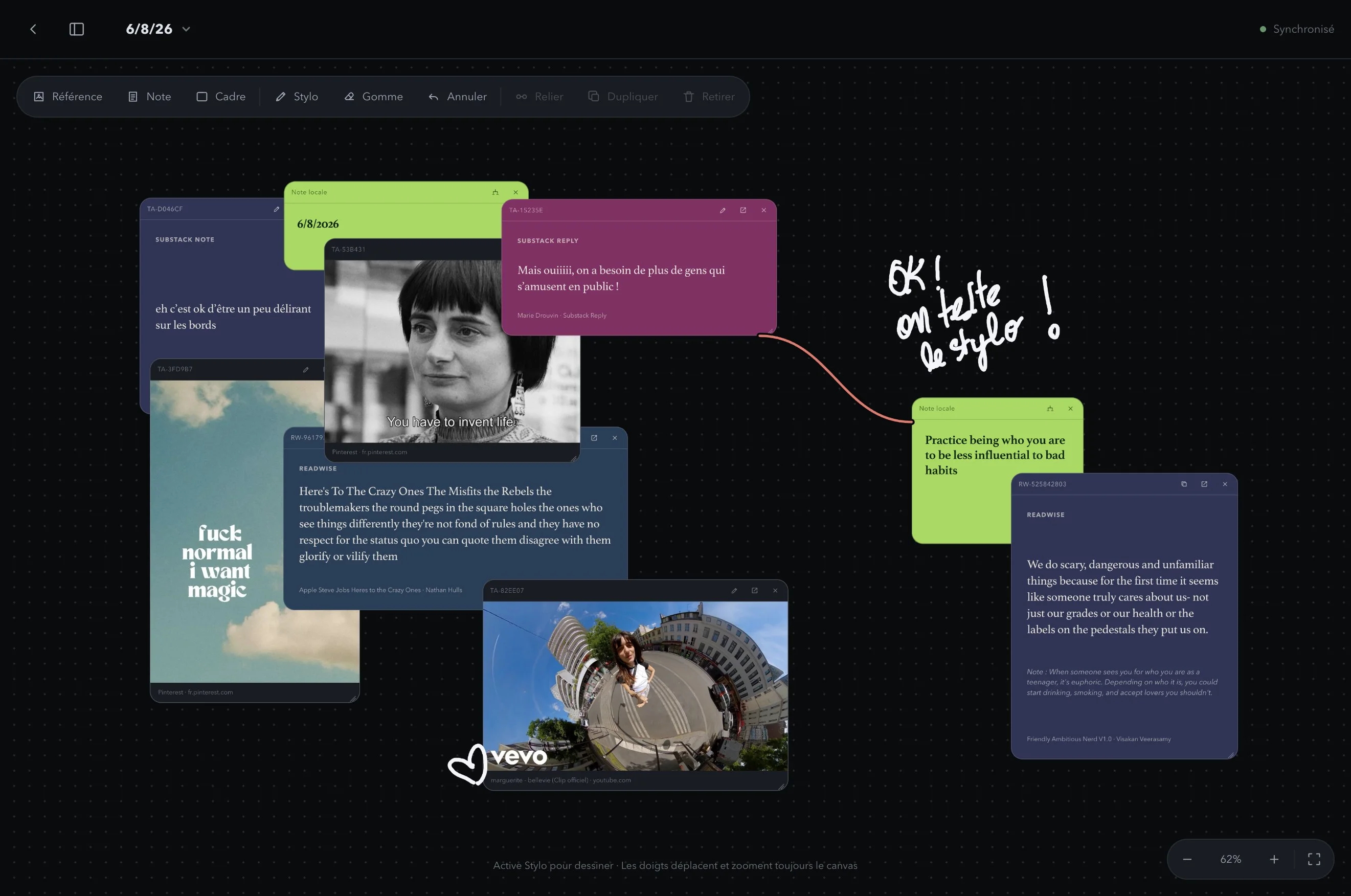
I originally wanted an app where I could think visually with all the things I save: my own notes, Readwise highlights, Pinterest saves, Twitter bookmarks, Substack notes and images. I wanted to search across those collections and put things together on a canvas.
There were already tools with canvases, but none of them quite worked for me. Freeform was not connected to my collections. Obsidian felt clunky, looked wrong and would have required one file for every Readwise highlight. Sublime had a canvas, but it felt like building on borrowed land. It is ultimately a social network, and I did not want more social media in my life.
So I built an alternative for myself. But what it turned into is actually more useful than the original idea: an archive I can reference directly from my AI work.
When I want to build something, generate an image or explain the vibe of a design, I can give Codex the code for one reference or point it at an entire collection. I do not have to copy and paste the same images into AI chats over and over. That has become the biggest use case for me.
- ArchiveReferences + sources
- AICodex accesses the archive
- CanvasThink with my references
How I built this
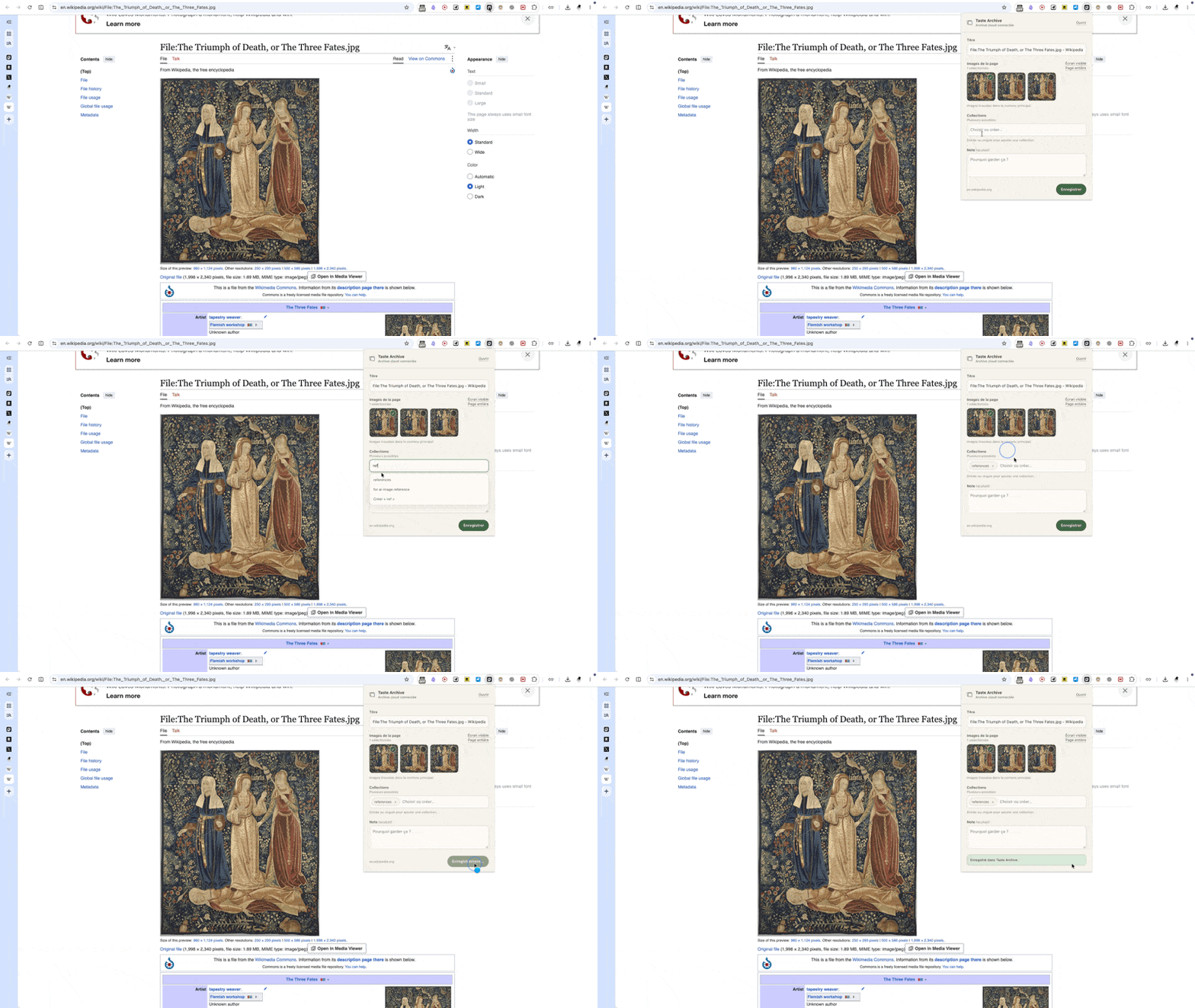
I started with the first half of the solution: somewhere I could save pictures and quotes, organise them into collections and keep their sources. Basically, an online database connected to a browser extension.
Over the first few weeks, I started adding more stupidly personal features:
- Detect when I was saving one of my own tweets or Substack notes and tag it in the right collection.
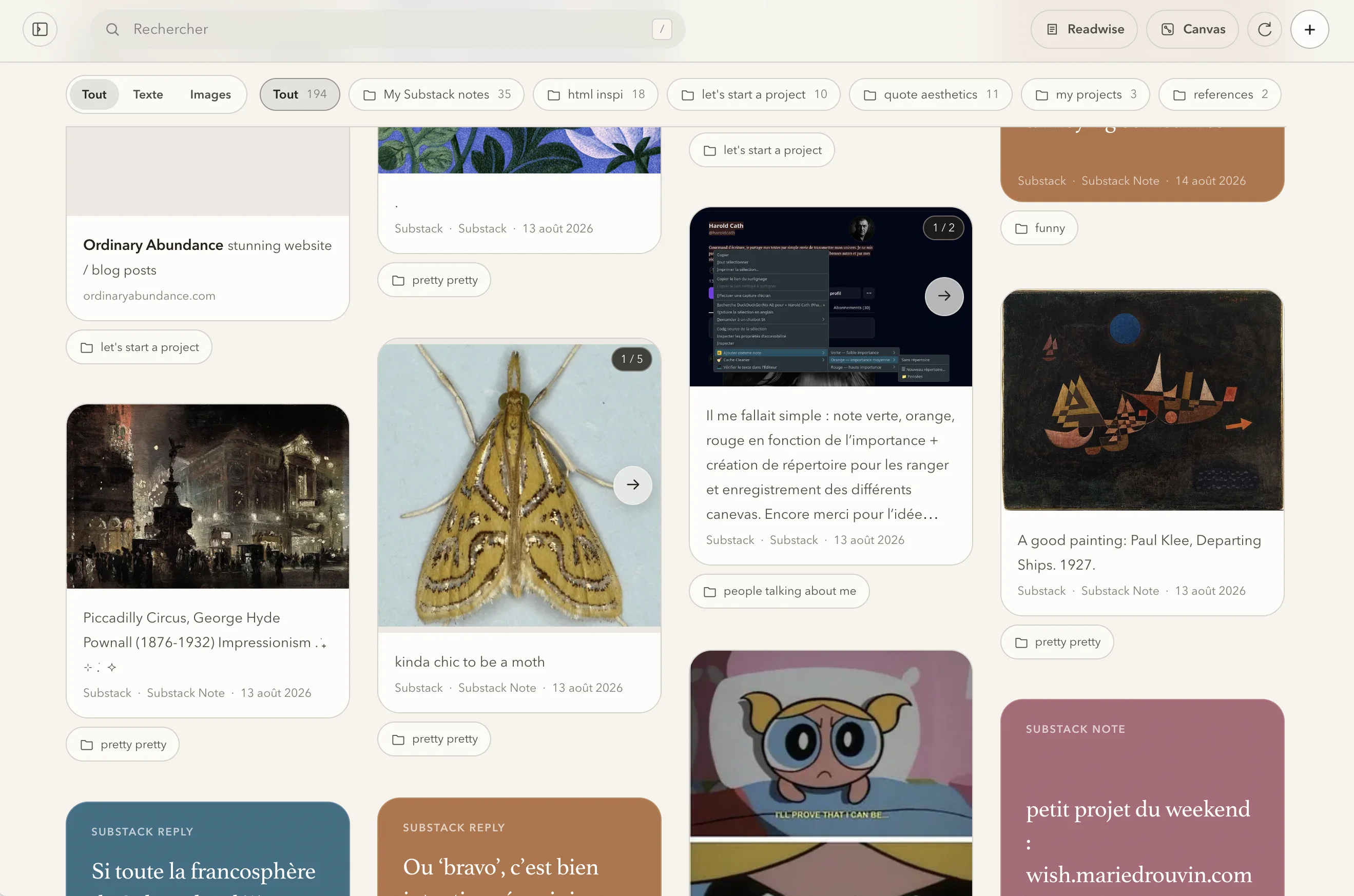
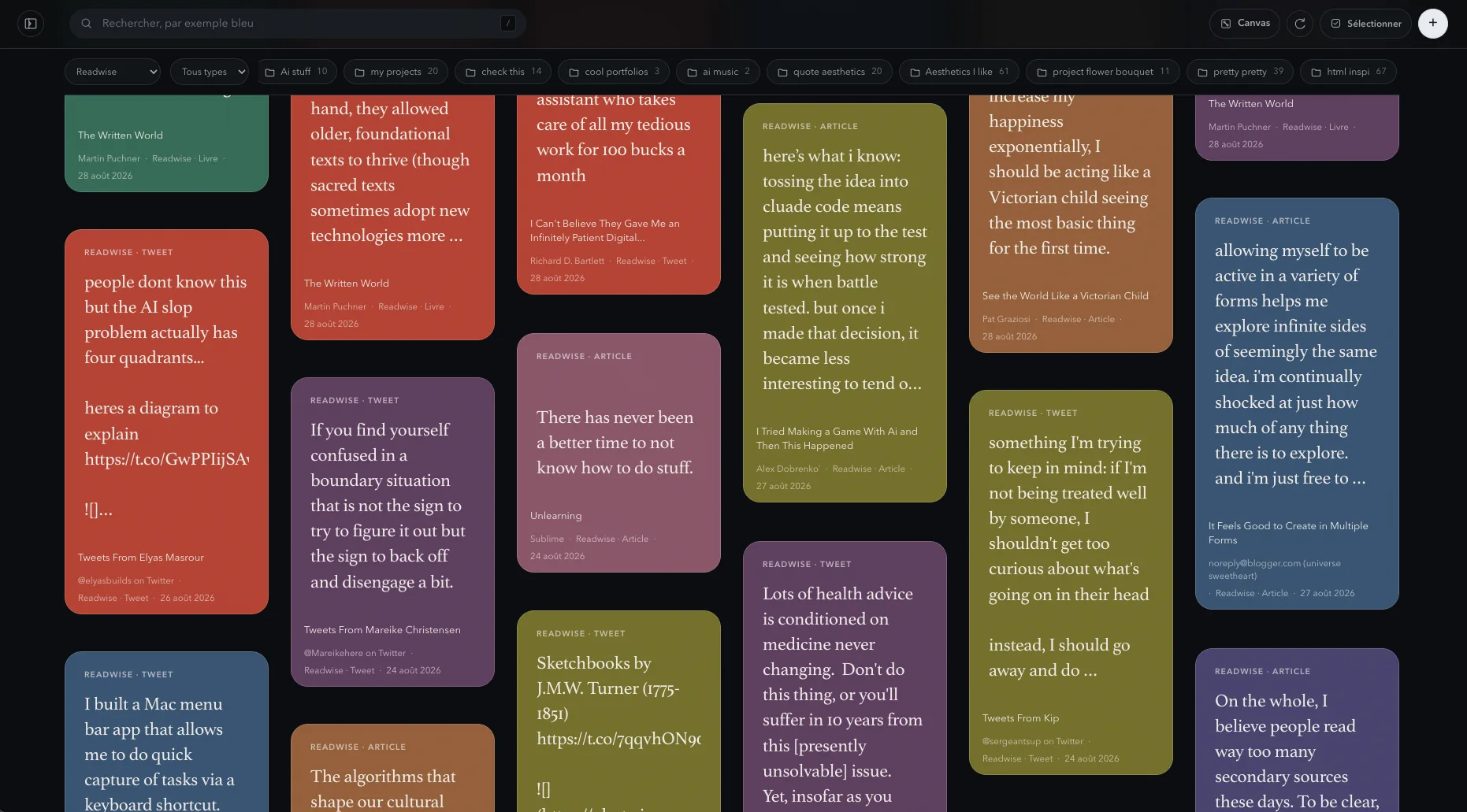
- Show text-only entries on coloured backgrounds using my own palette.
- Filter the archive by text, images or everything together.
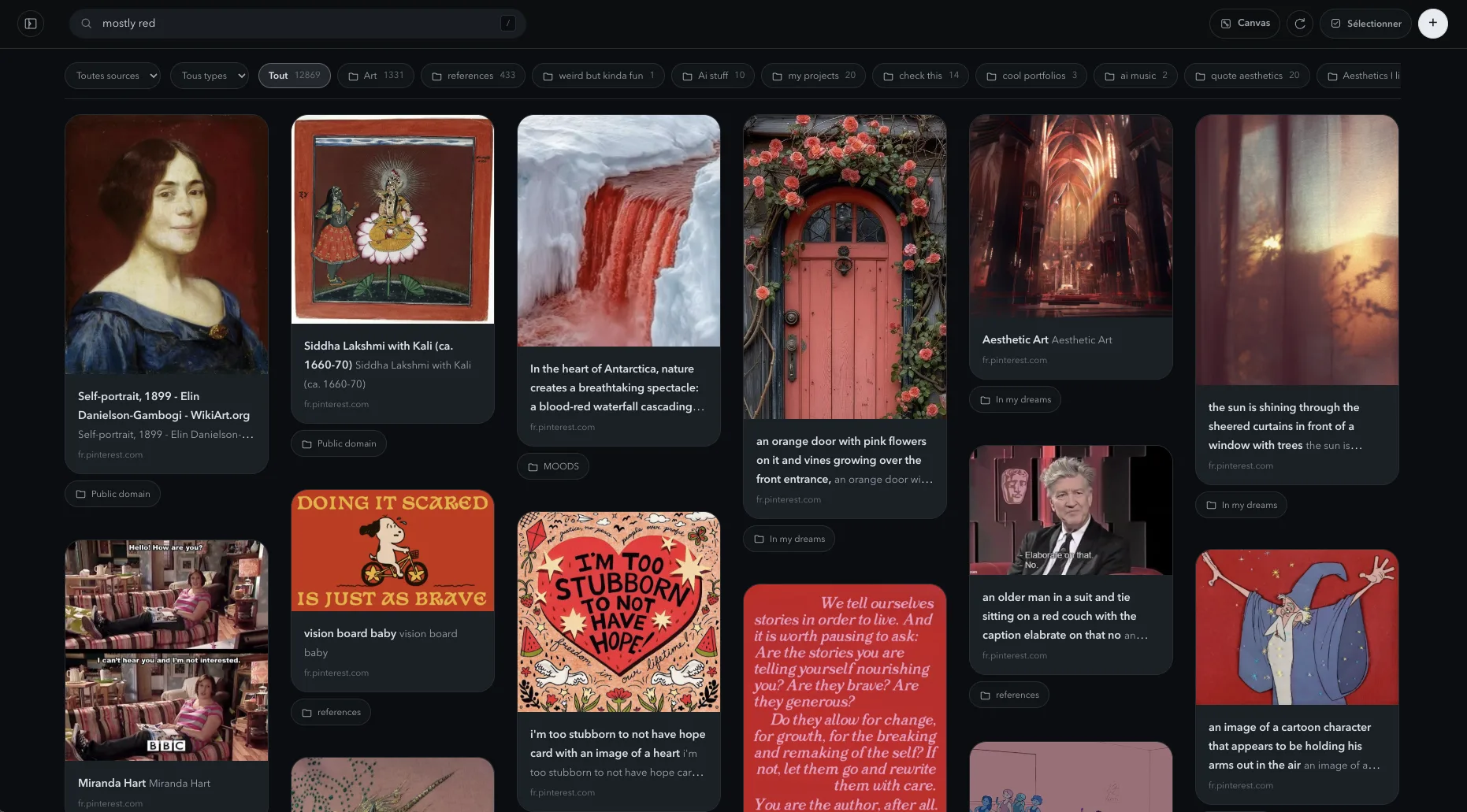
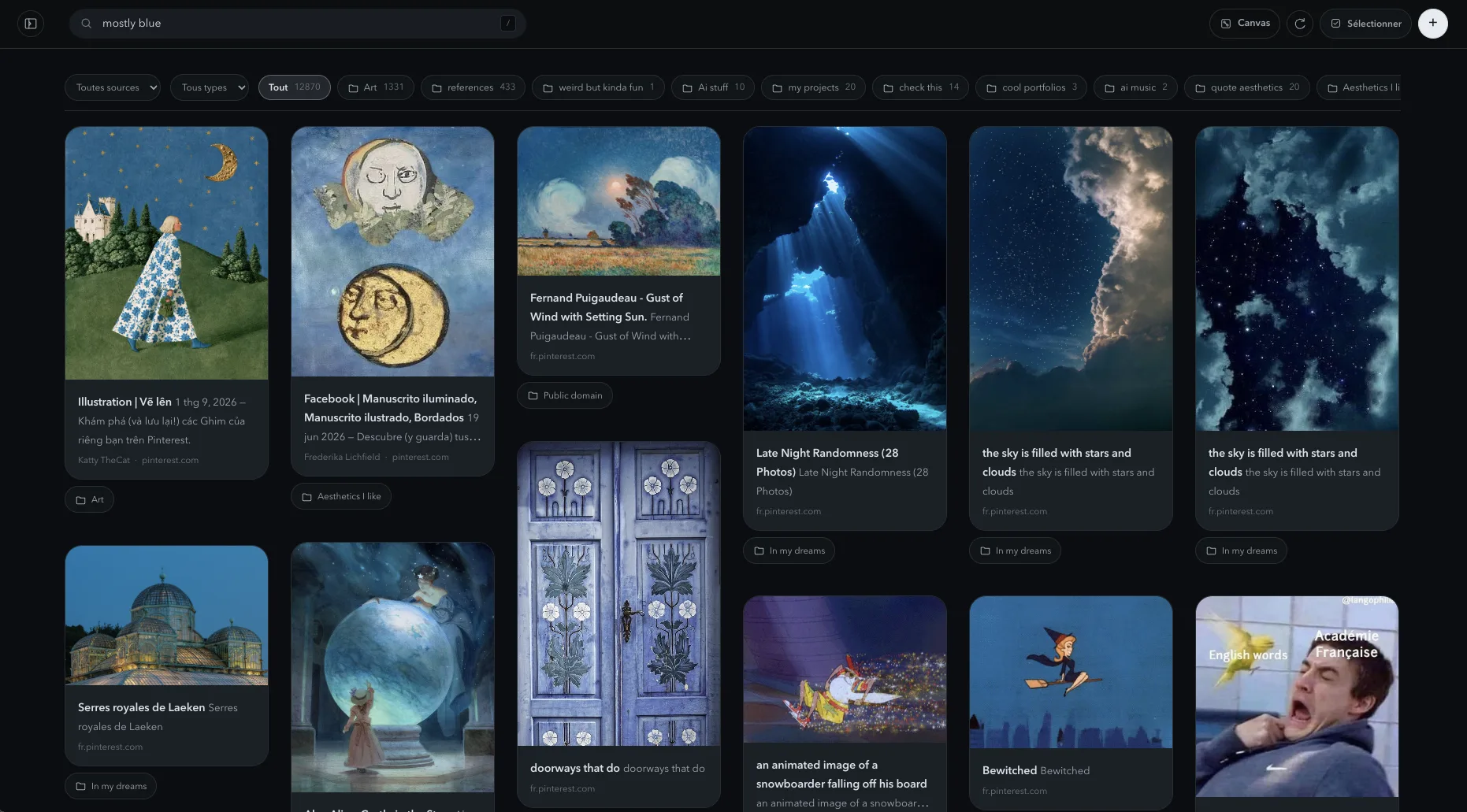
Once that was working well enough, I built the second half: a place where I could search the archive and drop items onto an infinite canvas. It gave me a more visual way to think, with multiple saved canvases, extra notes, collection search and the same text-or-image filters as the archive.
The part I expected to be difficult was Readwise. It is an external service, and my collection contains more than 10,000 highlights. I assumed I would be exporting CSV files constantly. Instead, Codex built an automated, separate Readwise collection that syncs with a button.
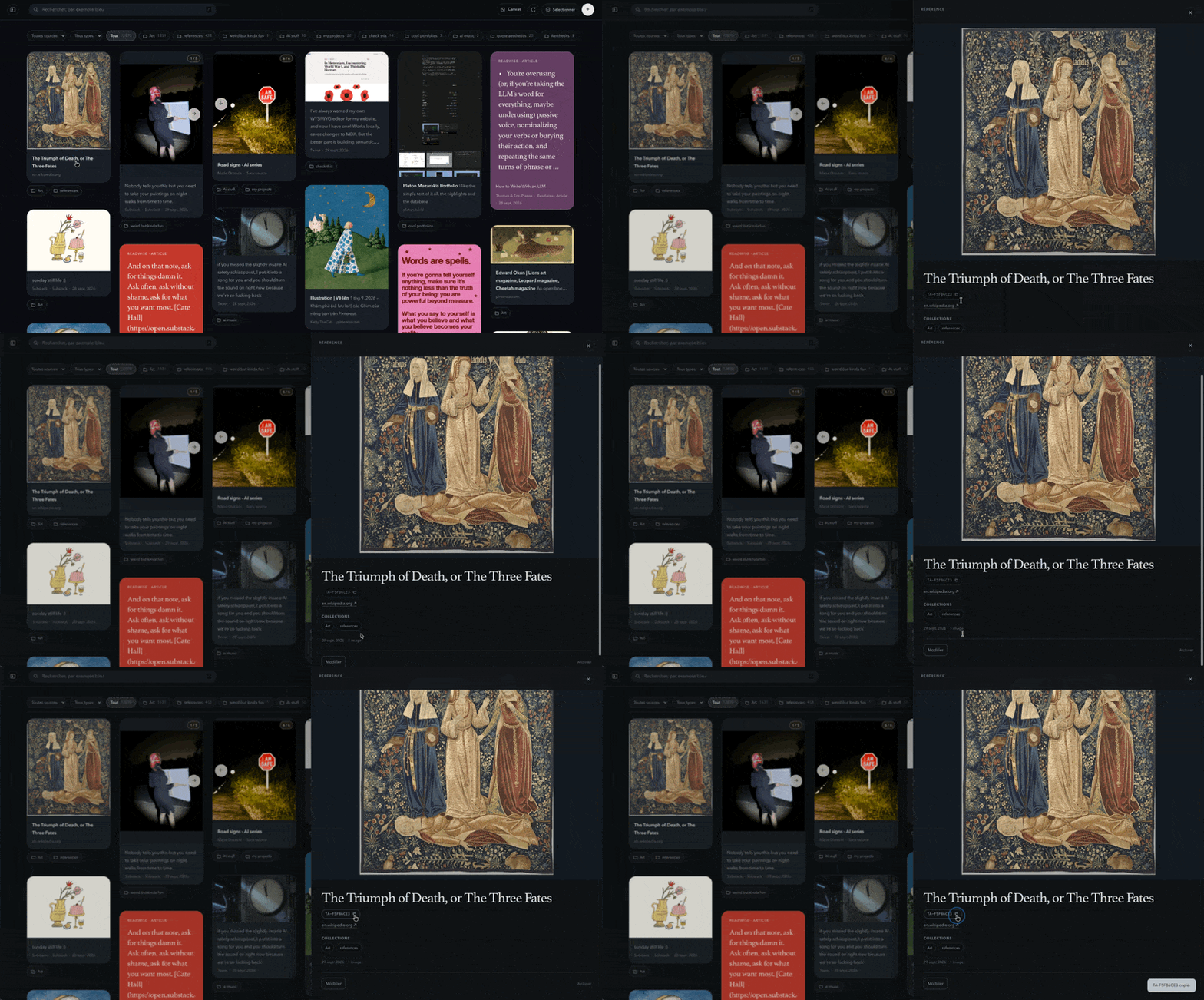
One of the ideas that came later became the biggest use case. Taste Archive has a synced local version on my computer. Every reference has its own code, and I can also point Codex to a complete collection. I can say, ‘look at this reference’ or ‘look at this collection’ when I am building something, generating images or trying to express the visual direction of a design.
The web app stays synced between my devices, while the local copy gives Codex access to the same reference system. It saves me from copying and pasting images into AI chats all the freaking time.
What comes next
I am now in the phase where I am using it extensively and trying not to add every little feature that crosses my mind. I keep track of those ideas, then wait to see which ones I genuinely miss and which were just whims of the moment.
For now, the roadmap is less about adding features and more about making Taste Archive increasingly stable, seeing how it handles a larger and larger collection, and smoothing out the collaboration with AI.
It has honestly become one of the most important tools in my workflow.